


Artificial Turf Is Detrimental to the Environment
Why Artificial Turf Is Detrimental to the Environment
Artificial turf is often marketed as a low-maintenance, water-saving alternative to natural grass. However, mounting scientific evidence shows that it creates significant long-term environmental harm. Unlike living grass, which actively supports ecosystems, artificial turf introduces pollution, heat, and waste problems that persist for decades.
Artificial Turf Is Detrimental to the Environment

1. Extreme Heat and Urban Heat Island Effect
Artificial turf absorbs and radiates far more heat than natural grass. On sunny days, surface temperatures can reach 140–180°F — often 20–86°F hotter than living turf.
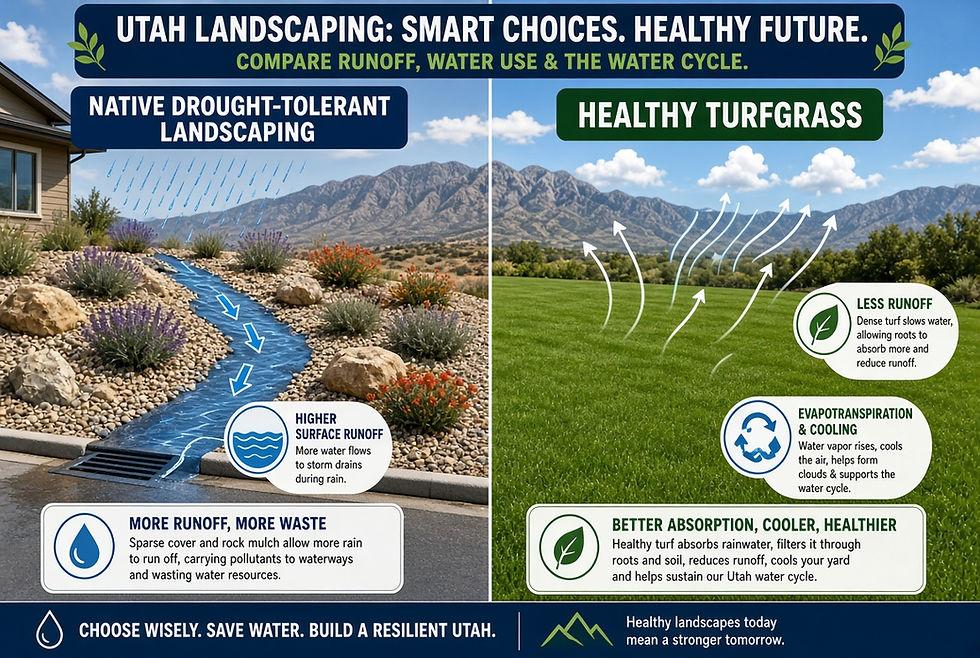
This intensifies urban heat islands, increases energy use for cooling nearby buildings, and raises the risk of heat-related illnesses. Natural grass cools the air through evapotranspiration, while artificial turf does the opposite.
2. Microplastic Pollution
Artificial turf sheds plastic fibers and crumb rubber infill (often made from recycled tires). Studies estimate a single field can release thousands of microplastics daily, with up to 2 tons of infill per year entering the environment.
These particles wash into waterways, soil, and oceans, where they are ingested by wildlife and enter the food chain — including human drinking water, blood, and organs.
3. Toxic Chemicals and PFAS (“Forever Chemicals”)
Artificial turf contains PFAS, heavy metals (lead, zinc, copper), PAHs, and other harmful compounds. These leach into stormwater runoff, contaminating groundwater, soil, and wetlands.
PFAS are linked to cancer, immune dysfunction, and developmental issues. They persist indefinitely in the environment. The European Union has restricted crumb rubber infill partly for this reason.
4. Increased Stormwater Runoff and Pollution
Without living roots, artificial turf is largely impermeable. Rain causes more runoff, carrying toxins and microplastics into rivers and lakes. Natural grass slows water, filters pollutants, and recharges aquifers.
5. High Carbon Footprint and Waste Problems
Manufacturing, transporting, and installing artificial turf requires fossil fuels and produces significant greenhouse gas emissions. Fields typically last only 8–15 years, after which most end up in landfills because recycling is difficult and expensive.
Natural Grass vs. Artificial Turf: A Clear Contrast
Issue | Natural Grass | Artificial Turf |
Temperature | Cools air (3–15°F cooler) | Extremely hot (up to 180°F) |
Water Cycle | Supports evapotranspiration & rainfall | Zero contribution, increases runoff |
Pollution | Filters water, sequesters carbon | Releases microplastics, PFAS, heavy metals |
End of Life | Biodegrades naturally | Landfill waste after 8–15 years |
Biodiversity | Supports insects, microbes, birds | Creates ecological dead zones |
Sources (2024–2026 research):
Cumberbatch et al. (2025), Sustainability – Comprehensive case study comparing environmental impacts.
Mount Sinai Exposomics Position Statement (2025) – Details PFAS, microplastics, and heat risks.
New Jersey DEP Synthetic Turf Review (2025)
Multiple studies on microplastics and chemical leaching (Mount Sinai, Clean Water Action, etc.)
Bottom Line: Artificial turf shifts environmental costs from water use to permanent pollution, heat, and waste. Well-managed natural grass, with smart watering practices, delivers real ecological benefits — cooling, water cycling, carbon sequestration, and habitat — without the toxic legacy.
It’s time to prioritize living landscapes that work with nature instead of against it.


Comments