


The best ways to Save Water in a Utah Drought — AND Strengthen the Water Cycle
🌱 How to Save Water in a Utah Drought — AND Strengthen the Water Cycle
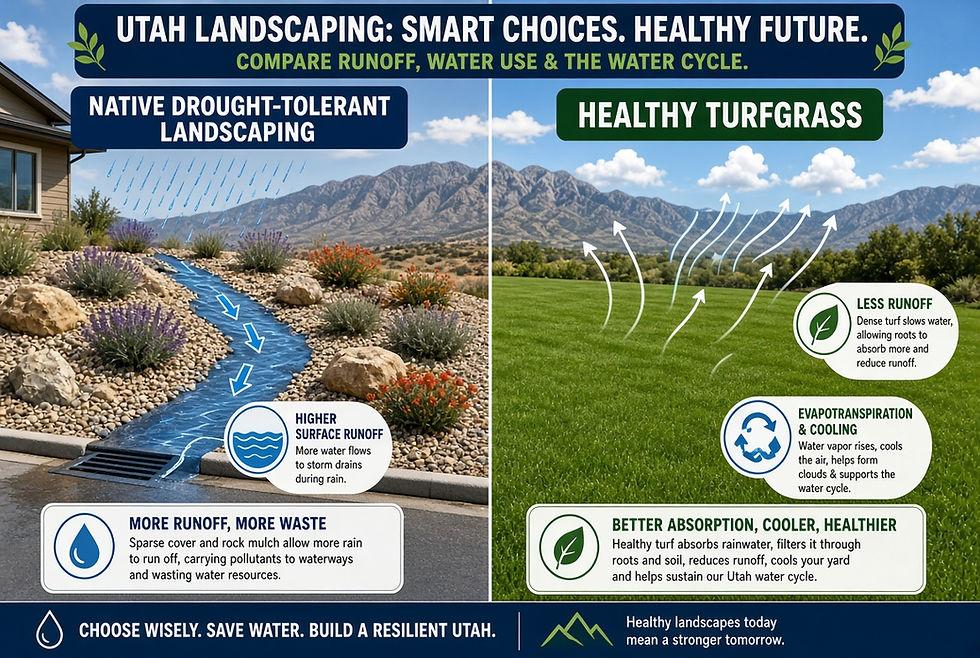
Utah is in drought again, but you can save significant water while helping build a stronger local water cycle. Healthy natural grass acts as a living “water pump,” recycling moisture back into the atmosphere through evapotranspiration to support humidity, clouds, and local precipitation. Save Water in a Utah Drought While Actually Building the Water Cycle

Here’s how to water smarter this summer:
Best Practices to Save Water & Grow the Flow:
Turn off your automatic controller — Water manually so you’re only applying what the lawn actually needs.
Water only when needed — Check your grass daily:
Look for a gray-blue color or footprints that stay down too long.
Do the screwdriver test: Push a screwdriver into the soil. If it goes in easily 4–6 inches, the lawn doesn’t need water yet.
Reduce to 1–2 deep waterings per week — This is often enough for established Utah lawns during summer.
Water the roots, not just the green on top — Apply enough water to soak 8–12 inches deep so roots grow downward and become more drought-resistant.
Spot water dry areas by hand — Use a hose or watering can on problem spots instead of running the whole system.
Water early in the morning (before 10 AM) using the Cycle & Soak method — Short cycles with breaks to avoid runoff.
Delay watering until mid-May (or later) and follow the Weekly Lawn Watering Guide at conservewater.utah.gov.
Allow dormancy during extreme heat — Grass can go brown and survive with very little water (as low as ¼ inch per month).
Mow at 2.5–3.5 inches and leave clippings on the lawn.
Add compost and aerate annually to improve soil’s water-holding capacity.
These simple habits dramatically cut water use while keeping grass healthy and active in the water cycle — cooling your yard, reducing runoff, and helping local precipitation.
Natural grass beats artificial turf and gravel every time when managed correctly. It cools neighborhoods, supports play areas, and actually helps “Grow the Flow.”
💧 What’s one change you’re making this summer?
Share this post to help your neighbors water smarter!


Comments