


Beat the Utah Fireworks Ban with Safe Grass Celebrations – Cooling Air, Water Cycle Benefits & America’s 250th
Beat the Utah Fireworks Ban with Safe Grass Celebrations – Cooling Air, Water Cycle Benefits & America’s 250th
As Independence Day, New Year’s Eve, or any festive occasion rolls around, many families look forward to backyard fireworks displays. The crackle, color, and communal joy create lasting memories—but safety should always come first. One often-overlooked hero in creating a safer fireworks environment is a healthy, well-maintained natural grass lawn. Far from being a fire hazard, properly prepared natural turf offers distinct advantages over hard surfaces, rock-heavy xeriscaping, or artificial (plastic) grass when it comes to safety, comfort, recoverability, and environmental performance—including its powerful ability to cool the air and support the local water cycle. Beat the Utah Fireworks Ban with Safe Grass Celebrations – Cooling Air, Water Cycle Benefits & America’s 250th

Why Natural Grass Excels as a Fireworks Venue
Natural grass provides a forgiving, dynamic surface that enhances both safety and enjoyment during fireworks displays:
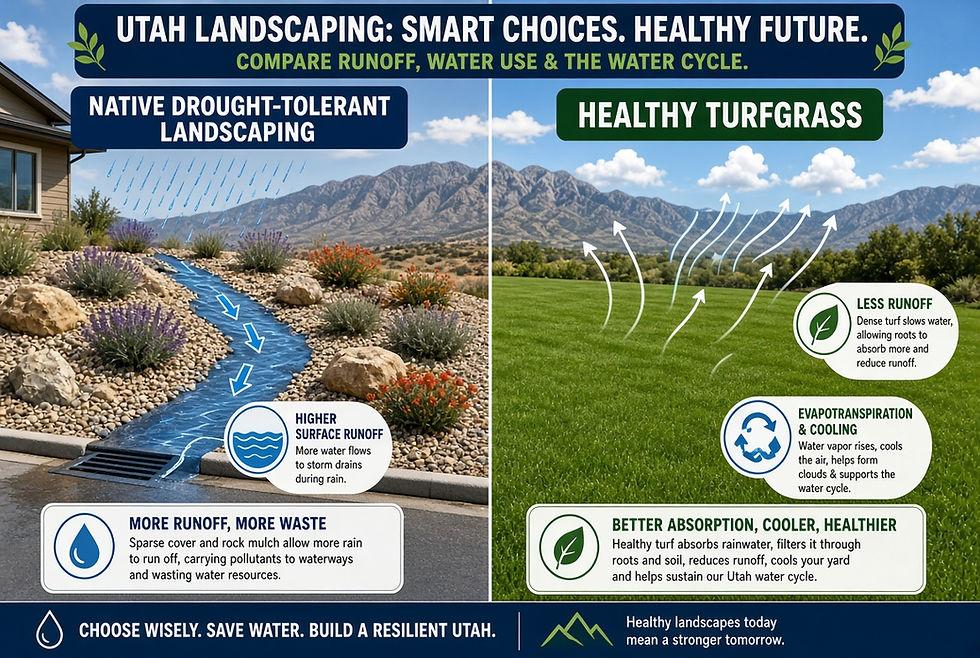
Temperature and Burn Protection + Air Cooling: Grass stays significantly cooler than concrete, asphalt, rocks, or synthetic turf—often 30–60°F cooler than pavement and dramatically lower than plastic surfaces that can exceed 100–150°F on hot days. Through evapotranspiration (ET), grass acts as a natural air conditioner: plants draw up water and release it as vapor, absorbing heat and actively cooling the surrounding air and surface. This creates a noticeably more comfortable microclimate for spectators, reducing heat stress during warm summer evenings and lowering the overall risk of heat-related discomfort or burns for barefoot kids, pets, or people relaxing on the lawn.
Water Cycle and Local Rain Benefits: Healthy turf plays a vital role in the local water cycle. Through transpiration, an acre of grass can return thousands of gallons of moisture to the atmosphere daily in summer, increasing local humidity and potentially contributing to enhanced precipitation—sometimes referred to in advocacy as helping make areas like Utah “rainmakers.” This recycling effect not only supports broader environmental sustainability but also helps maintain a slightly more humid, less arid micro-environment around the home, which can modestly aid in fire risk reduction by keeping grass and air moister during dry fireworks seasons.
Cushioning and Injury Reduction: Unlike unforgiving concrete or gravel (common in xeriscaped yards), grass offers natural padding that helps prevent slips, trips, or impact injuries, especially for children running excitedly or adults setting up chairs. It also provides better traction than slick hardscapes when dew or light moisture is present.
Ember and Spark Management: While dry vegetation can pose risks anywhere, a freshly mowed lawn minimizes flammable fuel load by removing tall, dry grass and thatch. Short, healthy turf allows embers to land where they are easier to spot and extinguish—often self-extinguishing in moist grass. Watering the lawn lightly before and after the display further reduces ignition risk, leverages the grass’s cooling and moisture-retaining properties, and supports its water-cycle benefits.
Environmental Recovery: Any minor scorching or residue from fireworks is typically temporary on natural grass. The living turf rebounds quickly with watering and time, maintaining its ecosystem services like cooling, oxygen production, carbon sequestration, stormwater filtration, and atmospheric moisture contribution.
Critical Comparisons: Natural Grass vs. Alternatives
Artificial (Plastic) Turf: Many experts strongly advise against launching or landing fireworks directly on synthetic grass. Embers and sparks can melt fibers, create permanent scorch marks, and release potentially harmful fumes if ignited. Synthetic surfaces lack the natural moisture, evaporative cooling, and self-healing properties of living grass—eliminating the air-cooling and water-cycle benefits while turning a minor spark into lasting damage and potential toxin exposure. Multiple manufacturers and installers recommend keeping fireworks, grills, and fire pits away from artificial lawns or using protective coverings on hard surfaces instead.
Concrete, Asphalt, or Pavement: These are often recommended for launching fireworks because they eliminate vegetation as fuel. However, they offer no cushioning, no evaporative cooling, scatter sparks more widely (increasing risk to nearby dry areas), and become uncomfortably hot for spectators. Standing or sitting on pavement during a show heightens burn and fatigue risks compared to a cool, moisture-recycling grass lawn.
Xeriscaping/Rock Yards: Gravel and rocks can trap hot embers in crevices, making fires harder to extinguish quickly. They also lack the cooling via ET, atmospheric moisture contribution, and cushioning of grass, creating a less hospitable and potentially more hazardous spectator area in an already arid climate.
Natural grass strikes an ideal balance: prepare the launch zone carefully (ideally on a small cleared hard or dirt patch if possible), and use the surrounding healthy lawn as the safe, cool, and moisture-enhancing gathering and viewing space.

Best Practices for a Safe Grass Fireworks Experience
To maximize safety on your natural lawn:
Mow Ahead: Cut the grass 1–2 days before the event to a recommended height (e.g., 2–3 inches depending on grass type). This reduces fuel, promotes density for better ET cooling, and keeps the area neat and accessible.
Water Strategically: Give the lawn a light watering before dusk to add moisture without creating mud. This enhances the grass’s air-cooling and local humidity benefits while providing extra fire protection. Have a hose or water source ready for any stray sparks.
Clear the Area: Remove toys, furniture, low branches, and debris. Designate a clear launch zone away from structures, trees, and the main viewing grass area.
Follow Local Rules: In places like Utah or other dry Western states, adhere to fireworks restrictions, burn bans, and permitting. Have a bucket of water, fire extinguisher, and garden hose on hand.
Supervise and Clean Up: Keep kids and pets at a safe distance. After the show, water the lawn thoroughly to dilute any residue, support recovery, and continue its role in cooling the air and recycling water.
Choose Grass-Friendly Products: Opt for lower-smoke or professional-grade fireworks when possible to minimize fallout.
Broader Benefits: Celebration Meets Everyday Value
A natural lawn doesn’t just shine on fireworks night—it supports year-round family activities, cools the air through evapotranspiration, increases local atmospheric moisture that can aid precipitation, air quality improvement, and mental well-being. Mowing and maintaining it doubles as healthy outdoor exercise, tying into the physical and recreational advantages of turf. In contrast, alternatives like artificial turf or heavy xeriscaping can limit these uses while introducing new risks during celebrations and eliminating the grass’s valuable contributions to the water cycle and local climate moderation.
For families hosting backyard shows, a vibrant natural grass lawn creates the safest, most comfortable, and most memorable setting. It absorbs the excitement of the night—and bounces back ready for the next gathering, all while actively cooling its surroundings and supporting the local water cycle.
This Fourth of July (or any celebration), invest in your lawn’s health with proper mowing and care. It’s more than a surface—it’s a safe, living foundation for joy, tradition, cooler air, and a healthier local environment. Stay safe, celebrate responsibly, and let your grass be the green stage for unforgettable nights under the fireworks.


Comments