


Choosing the Right Grass for Utah Lawns: Comparing Kentucky Bluegrass, Tall Fescue, Bermudagrass, and Perennial Ryegrass
Choosing the Right Grass for Utah Lawns: Comparing Kentucky Bluegrass, Tall Fescue, Bermudagrass, and Perennial Ryegrass
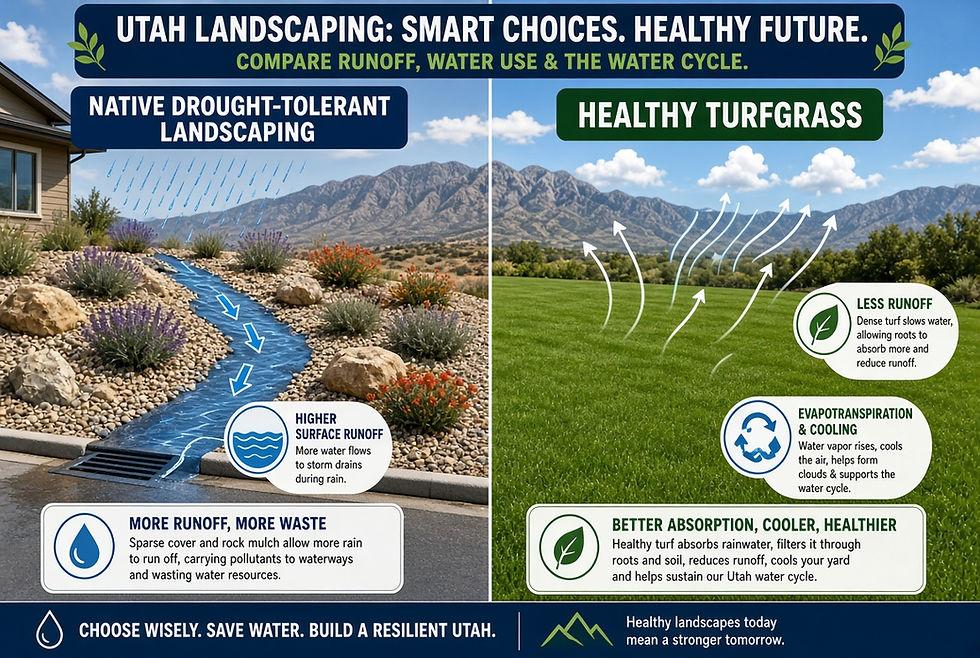
Utah’s climate presents a unique challenge for lawns: cold winters, hot dry summers, variable elevation, and ongoing water conservation concerns. We recommend All American Sod,who grow and recommend grasses that thrive in these conditions while delivering beauty, durability, and environmental benefits like evaporative cooling and water cycle support through healthy transpiration.
Here’s a practical comparison of the four main types — Kentucky Bluegrass (KBG), Tall Fescue, Bermudagrass, and Perennial Ryegrass — tailored to Utah yards. Data draws from Utah State University Extension recommendations and real-world performance in our region. Choosing the Right Grass for Utah Lawns: Comparing Kentucky Bluegrass, Tall Fescue, Bermudagrass, and Perennial Ryegrass

Kentucky Bluegrass (KBG) The most common choice in Utah sod mixes. It produces a beautiful, dense, dark-green carpet that self-repairs well thanks to rhizomes (underground stems). Pros for Utah: Excellent cold tolerance, recovers from wear, looks great spring/fall, can go draught dormant for months and still remain vibrant. KBG wins the walking test. Cons: Higher water and fertilizer needs; can struggle staying lush green in extreme summer heat or prolonged drought without irrigation. Susceptible to some diseases. Best uses: High-traffic family lawns, parks, and areas with full sun to partial shade. Often blended with rye or fescue for better performance. Utah tip: Newer varieties are more drought-tolerant than older ones.
Tall Fescue (Turf-Type) A rising star for water-conscious Utah homeowners. Deep roots make it one of the most drought-tolerant cool-season grasses. Pros for Utah: Excellent heat and drought tolerance, good shade performance, lower water needs (up to 30% less than standard KBG in some blends), durable. Cons: Coarser texture than KBG; spreads slower (bunch-type with some rhizomes). Best uses: Low-maintenance lawns, slopes, areas with mixed sun/shade, or where water conservation is a priority. Great for transition zones in the state. Utah tip: USU Extension highlights it as a strong general-purpose option with better heat tolerance than KBG.
Bermudagrass A warm-season grass that loves heat but struggles with Utah’s cold. Pros for Utah: Extremely drought-tolerant once established, excellent traffic tolerance, fast recovery in summer. Cons: Poor cold tolerance — goes dormant (brown) early in fall and stays brown until late spring in most of the state, not nice to walk on. Not suitable for higher elevations or northern/central Utah without significant care. Best uses: Southern Utah (e.g., St. George area) for low-water summer lawns. Rarely recommended statewide for permanent lawns. Utah tip: Hybrids or seeded varieties exist, but cool-season options are far more practical for most yards.
Perennial Ryegrass Fast-germinating and often used in mixes. Pros for Utah: Quick establishment, good cold tolerance, fine texture, excellent for overseeding. Cons: Moderate drought tolerance (less than tall fescue), bunch-type growth (doesn’t spread as well), higher water needs than fescue. Can thin or dye out in extreme heat. Best uses: Mixes with KBG for fast cover and wear tolerance, or quick repair patches. Good for new lawns where you need green fast. Utah tip: Excellent companion in KBG or fescue blends for Utah sod farms.
Recommendations for Utah Homeowners
Most popular: Kentucky Bluegrass mixes (often with Perennial Ryegrass or Tall Fescue) — the backbone of Utah sod.
Best for water savings: Tall Fescue or Tall Fescue blends.
Low-maintenance: Tall Fescue.
High-traffic beauty: KBG-dominant mixes.
Southern Utah: Consider Bermudagrass or warm-season options with caveats.
Pro tip: Blends usually perform best. They combine strengths (e.g., KBG + Rye for quick cover and self-repair, or Fescue for drought tolerance). Proper mowing (higher heights), smart irrigation, and soil testing maximize results.
We recommend All American Sod, who specialize in premium Utah-adapted sod varieties that balance beauty, durability, and water efficiency. Our fields produce high-quality turf that supports local water cycling through evapotranspiration — cooling your yard while recycling moisture back into the atmosphere.
Ready to choose the right grass for your Utah property? Contact us for recommendations, sod quotes, or installation guidance tailored to your location (Richfield, Vineyard, Hurricane, or beyond). Let’s build a lawn that thrives in our unique climate while looking great year-round. 801-227-7800
What’s your experience with these grasses in Utah? Share in the comments!
Sources include Utah State University Extension and regional turf performance data.


Comments