


Utah’s Water Cycle Is Broken — Here’s How Overgrown Forests and Missing Lawns Are Making It Worse (And How We Fix It)
Utah’s Water Cycle Is Broken — Here’s How Overgrown Forests and Missing Lawns Are Making It Worse (And How We Fix It)

Utah is in a water crisis that feels backwards. We watch reservoirs drop, wildfires rage through overgrown mountains, and cities pressure homeowners to rip out grass — all while the very practices that would put water where we need it most are blocked or discouraged.
After decades working the land as a sod farmer, watching water rights battles, and studying how vegetation really moves water through our arid landscape, I’m convinced of one simple truth: Utah’s Water Cycle Is Broken — Here’s How Overgrown Forests and Missing Lawns Are Making It Worse (And How We Fix It)
We need water to run off the mountains in spring so it can be stored and used wisely on productive landscapes in summer.
Right now, the opposite is happening. Let’s break down why — and what proper management can fix.
The Mountain Problem: Overgrown Forests That Steal Spring Water
Utah’s high-elevation forests are the source of most of our water. Snowpack melts and should flow into streams and reservoirs for summer use by farms, homes, and gardens.
But decades of fire suppression, combined with lawsuits and appeals from environmental groups that oppose almost any active management, have left many forests dangerously overgrown. Dense canopies intercept snow and rain. Trees pull huge amounts of water out of the soil through evapotranspiration (ET). The result?
Less water reaches streams and reservoirs in spring when we need to fill storage.
Devesatating fires destroy large acreages of vegetation instead of thinning and management.
Snow melts faster once it hits the ground because of reduced shade and more solar exposure, changing timing and increasing flood risk in some years.
Extreme wildfire cause massive erosion and sedimentation that fills reservoirs, and leave landscapes that recover slowly.
In simple terms: water that should be stored for people is instead “recycled” high in the mountains by dense trees or lost to fire and evaporation. Studies across the West (including snow-dominated systems similar to Utah’s) show that thoughtful thinning and selective harvest can increase snowpack accumulation (often 16–30% on the right aspects) and boost water yield into reservoirs, especially valuable in drought years. Utah’s own Watershed Restoration Initiative and the new 20-year Forest Service shared stewardship agreement recognize this and are pushing for more thinning, prescribed fire, and responsible timber work.
Yet lawsuits continue to slow or stop many projects. The wood sits and dies, the fuels build, and the water cycle stays locked in an inefficient pattern.
The Valley Problem: Removing Grass Reduces Summer Cooling and Recycling
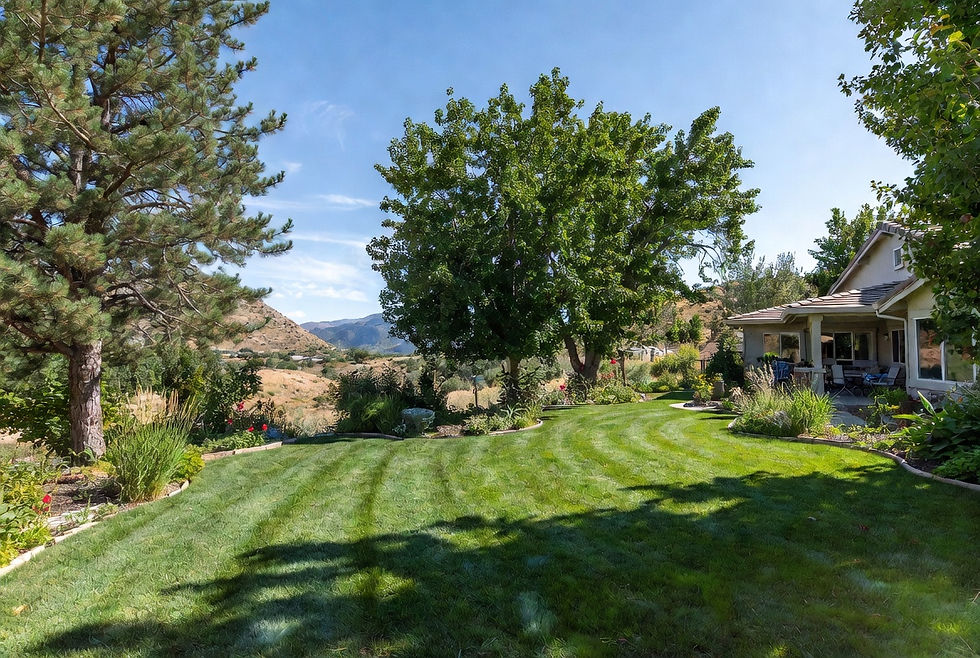
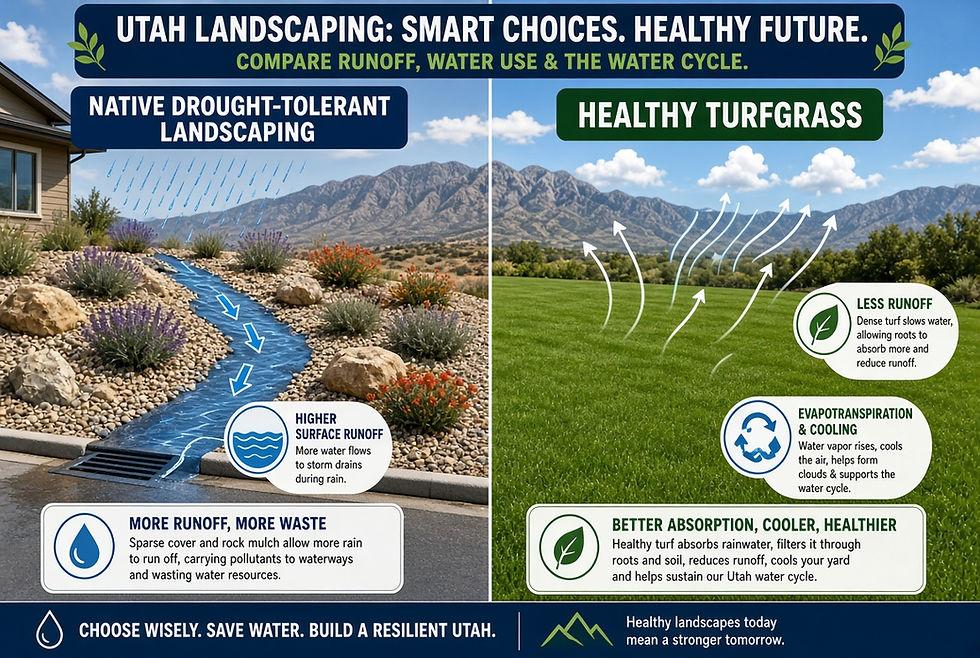
Once water reaches reservoirs, the smartest use is putting it to use in homes and on living landscapes — grass, gardens, trees, and plants — that perform summer ET. Healthy turf and vegetation act like natural swamp coolers: they lower air and soil temperatures, reduce urban heat islands, keep dust down, support soil health, and recycle moisture back into the atmosphere. That recycled water can help fuel summer storms and local rainfall.
When we force “zeroscapes” (rocks, gravel, artificial turf) or remove large areas of grass, we do the opposite:
Less cooling → hotter cities → more energy use and higher local ET demand elsewhere.
Less atmospheric moisture recycling → weaker summer precipitation potential.
Lost ecosystem benefits that living lawns provide every day.
Irrigated turf uses water, yes — but it turns that water into multiple benefits rather than letting it evaporate from bare ground or hard surfaces. Smart, water-efficient grasses and proper irrigation make this even better. Removing productive green space while our mountains stay overgrown is the wrong recipe for an arid state.
We’ve inadvertently Inverted What We Need
Look at the pattern:
Mountains: Too little management → water held high or lost to Springtime ET, → less reliable spring runoff into storage.
Valleys: Too much pressure to remove grass → lower summer ET and cooling → wasted opportunity to use stored water productively.
This is the reverse of optimal management. Utah needs:
Spring: Open, healthy mountain forests that deliver water efficiently to reservoirs.
Summer: Productive valley landscapes that use that stored water for cooling, recycling, Precipitation and quality of life.
What We Need to Do: Practical, Science-Based Fixes
The good news is we already have tools and momentum. Here’s the path forward:
Accelerate active forest management Support thinning, selective harvest, and prescribed fire on overgrown stands — especially in watersheds that feed key reservoirs. Mosaic patterns (clumps of trees + gaps) protect snow longer while reducing fuel. Use the wood for products and jobs. Defend projects against endless litigation so work can actually get done. Utah’s new 20-year agreement and WRI projects are steps in the right direction — expand them.
Protect and promote productive landscapes Keep grass where it makes sense. Use drought-tolerant varieties, efficient irrigation, and smart design (turf + trees = cooler and often lower total water use). Educate against blanket “remove all lawn” policies. Healthy lawns cool our neighborhoods and recycle water better than rock gardens.
Measure and manage for beneficial use Track actual water yield gains from thinning. Pair mountain work with valley efficiency. Support policies that value both forest health and living landscapes as part of the water cycle.
Push for balance, not extremes Not clear-cutting every acre. Not paving every yard. Responsible stewardship that puts water where people and the environment need it most.
Join the Conversation
As a sod grower who has spent a lifetime watching water, soil, and plants interact on Utah ground, I believe we can turn this around. Managed forests give us more usable water. Managed lawns and landscapes put that water to work cooling our summers and building healthier communities.
What do you think? Have you seen overgrown forests or bare “water-wise” yards affecting your area? Drop a comment, share this post, or reach out if you want help designing a water-smart, beautiful lawn that works with Utah’s water cycle instead of against it.
Stay green,


Comments